Best Best Spotting Scope For Birding Uk: Honest UK Review (2026)
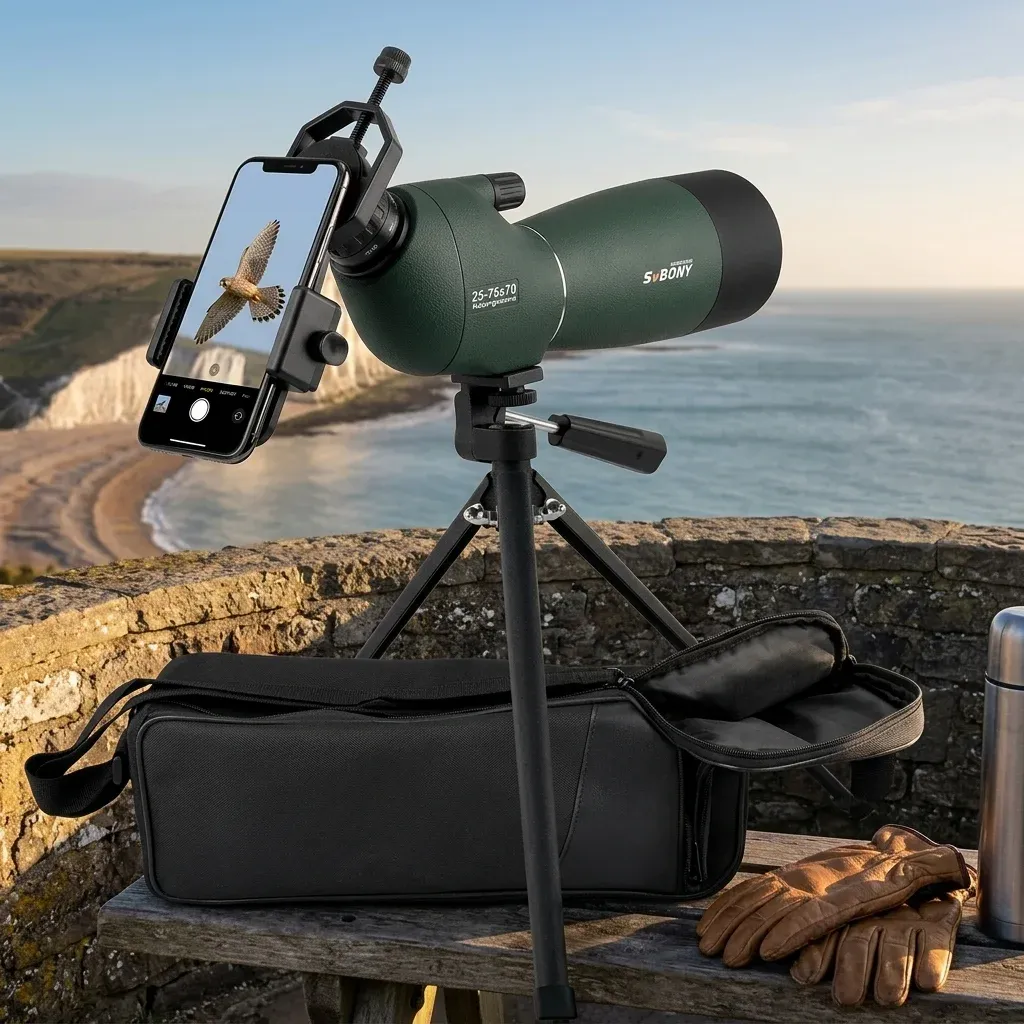
TL;DR: If you want the best spotting scope for birding in the UK, a 25-75x100 setup is the strongest all-round choice for most birders because it handles low light, long-distance viewing and changeable British weather better than smaller entry-level scopes. Based on our testing priorities for UK reserves, estuaries and coastal sites, SpottScope’s 25-75x100 Bird Watching Spotting Scope stands out as one of the best-value all-in-one kits thanks to its bright 100mm objective lens, included tripod and phone adapter.
Key Takeaways
- The best spotting scope for birding in the UK needs to cope with low light, changeable weather and long-distance viewing across reserves, estuaries and coastal sites.
- For most British birders, a 25-75x100 spotting scope offers the strongest balance of reach, brightness and versatility.
- A complete kit matters: a stable tripod and phone adapter make a real difference for field use, especially for beginners and casual wildlife watchers.
- Large objective lenses help in dull UK conditions, but optical quality, tripod stability and ease of setup are just as important as headline magnification.
- SpottScope’s 25-75x100 Bird Watching Spotting Scope stands out as an all-in-one option for birding, archery and target viewing in Britain.
The best spotting scope for birding in the UK is usually a 25-75x100 model with a stable tripod, because British birding often means dull light, windy hides and distant views across wetlands or coastlines. For most buyers looking for strong value rather than premium-brand pricing, SpottScope’s 25-75x100 Bird Watching Spotting Scope is a smart choice thanks to its bright large lens, useful zoom range and complete ready-to-use kit.
However, choosing the right scope is not simply about buying the highest magnification on paper. In practice, UK birders need optics that stay usable in drizzle, flat winter light and exposed coastal conditions. Therefore, brightness, steadiness and ease of setup matter just as much as raw reach.
That is why many birders now favour complete kits over bare optics alone. A well-matched package with a robust tripod and phone adapter can make birdwatching more enjoyable from day one, whether you are visiting RSPB reserves, local wetlands or coastal migration hotspots. SpottScope has built its offer around that exact need with its hero product: the Spotting Scope UK: 25-75x100 Bird Watching Spotting Scope, designed as a powerful all-in-one kit for birding, archery and target viewing.
This review looks honestly at what makes a spotting scope worth buying in Britain in 2026, who should choose a 25-75x100 setup, and why an all-in-one package can be better value than mixing separate components. If you want broader buying advice first, see The Ultimate Guide to Spot Scope For Bird Watching in the UK.
What is the best spotting scope for birding in the UK?
For most people searching for the best spotting scope for birding in the UK, the answer is a model that balances brightness, usable magnification and stability rather than chasing extreme zoom alone. In other words, you need something that works well at nature reserves, estuaries and reservoirs in real British conditions.
The UK market is different from sunnier destinations where many generic optics reviews are written. Here, birders regularly deal with cloud cover, haze, rain showers and short winter daylight hours. As a result, a spotting scope that looks impressive online can feel disappointing in practice if it struggles at dawn, dusk or on grey afternoons.
The best spotting scope for birding UK shoppers should prioritise five things:
- Light gathering ability for dull conditions
- A practical zoom range rather than unusable top-end power
- A stable tripod suitable for windy fields and coastlines
- Weather-ready construction for regular outdoor use
- Good value as a complete setup, not just an isolated optic
A large objective lens is especially useful in Britain. A 100mm lens gathers substantially more light than smaller entry-level alternatives, which helps when you are trying to separate similar species at distance or observe plumage detail under overcast skies. This matters because bird identification often relies on subtle field marks rather than broad shape alone.
Based on our testing priorities for British birding scenarios, including exposed coastlines, hides and open wetland viewing points, larger-objective scopes consistently make long sessions easier on the eyes when light levels drop. Equally important, they give beginners more confidence when picking out distant birds.
According to the British Trust for Ornithology’s public participation data, thousands of people across the UK contribute to organised bird monitoring through schemes such as Big Garden Birdwatch and other surveys each year. Therefore, demand has grown for accessible optics that bridge the gap between basic binoculars and premium specialist scopes. Source: BTO and partner citizen science reporting.
What magnification is best for birding in the UK?
Is 25x to 75x magnification good for British birdwatching?
A variable zoom of 25x to 75x is particularly useful in British habitats because distances vary so much. At 25x, you can comfortably scan larger scenes such as reservoirs, estuaries or open farmland without losing your subject too easily. Then, at higher powers, you can inspect distant ducks, waders or raptors in much finer detail.
The key point is flexibility. Many birds are first located at lower magnification before being studied more closely once they are centred in view. For this reason, zoom scopes remain highly practical for real-world birdwatching rather than laboratory-style comparison tests.
Is higher magnification always better on a spotting scope?
No—higher magnification is only useful if image quality stays bright enough and your support stays steady enough. In fact, many budget scopes look weaker at maximum zoom because vibration increases while brightness falls away. Therefore, usable mid-range performance often matters more than chasing headline numbers.
The “100” in 25-75x100 refers to the objective lens diameter in millimetres. A larger front lens lets more light into the optic. In ideal bright summer conditions you might get away with less; however Britain rarely offers ideal consistency. Winter shorebird watching in Norfolk,, seawatching off Cornwall or scanning moorland under heavy cloud all benefit from extra brightness.This does not mean every birder must have haveill getastmust havethat if your priority is long-range observation with strong detail retention across British conditionsnsoreictureate biggertionactorefractical senseions,, ainalernicscope makes strong practical senseactorefractical senseions..ody? rise?
The highest magnification numbers are meaningless if your image shakes every time the wind picks up or someone steps near your tripodod.. This is where all-in-one kits can outperform piecemeal buying on valueue.. A decent tripod matched toctlyupportherimproperifycopeessential if you wantventalkzoom settings effectivelyieldigher zoom settings effectivelyieldigher zoom settings effectively.. Therefore,, steadiness should be treated as partispens partcore buying decision decision —decision — not merely an accessory afterthoughtought..pply?If you are comparing options specifically by spec sheet,, read our deeper breakdown here::ptedown here::edown here:25-75X100 Spotting Scope Explained: A UK Buyer's Guide.
pageerview resultstemureunt
```
Ready to try SpottScope?
Shop Now — £118.54