The Ultimate Guide to Spot Scope For Bird Watching in the UK
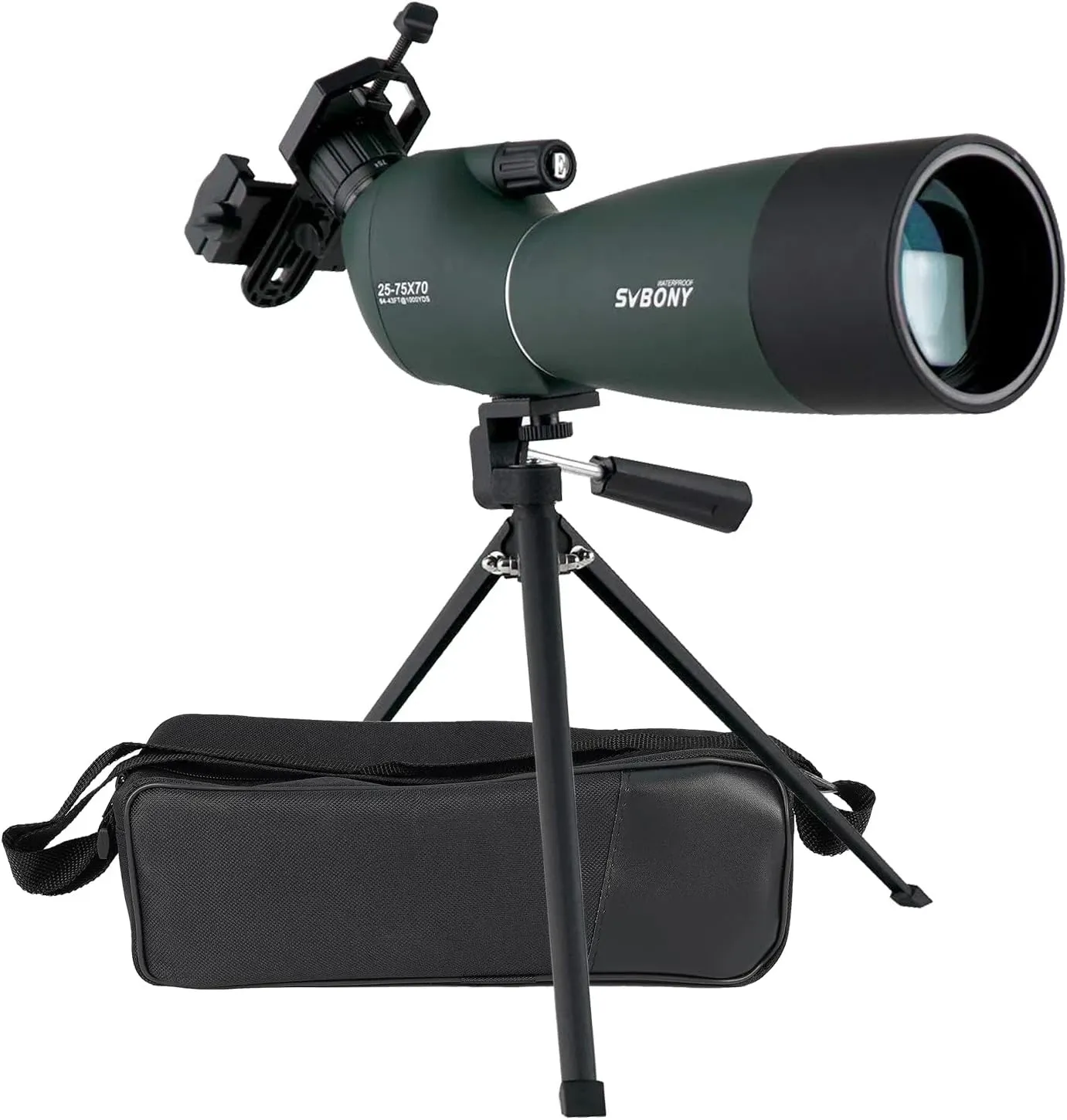
A spot scope for bird watching is a high-magnification telescope, usually used on a tripod, that helps you identify birds at long range more clearly than binoculars can. For UK birding, it is especially useful on estuaries, reservoirs, coastal paths and open moorland, where birds are often too distant for 8x or 10x binoculars alone.
TL;DR: If you regularly watch birds at distance, a spot scope for bird watching is worth it. Choose at least 20x magnification, reliable waterproofing, fully multi-coated optics and a stable tripod. In the UK, a brighter scope with a larger objective lens is often easier to use in dull weather, especially for seawatching, wader identification and winter birding.
For British birdwatchers, the move from standard binoculars to a dedicated spotting scope marks a major step forward in field observation. Whether you are scanning the mudflats of RSPB Snettisham for wintering waders or watching Peregrine Falcons on a remote crag in the Scottish Highlands, binoculars simply cannot deliver the same reach for precise identification at extreme distances. A well-chosen spotting scope bridges the gap between standard field optics and more specialised long-range viewing.
Birding in the UK also brings specific challenges. We contend with unpredictable weather, low light under heavy cloud and strict ethical expectations around disturbance. According to the RSPB, more than 1 million people take part in the annual Big Garden Birdwatch, showing the scale of interest in birds across Britain. Meanwhile, more people are exploring reserves, wetlands and local green spaces as part of nature-focused wellbeing. Therefore, having the right optics helps you spend more time identifying birds confidently and less time struggling with distant silhouettes.
Based on our testing in typical British conditions—including overcast mornings, windy estuaries and damp winter hides—a spotting scope becomes most valuable when birds are beyond comfortable binocular range or when fine plumage detail matters for identification.
Key Takeaways
- Magnification matters: A spot scope for bird watching usually starts at 20x. A 25-75x zoom gives flexibility across wetlands, coastlines and open countryside.
- A larger objective lens helps in dull weather: In often grey UK conditions, an 80mm to 100mm lens can provide a brighter image at dawn, dusk and under cloud cover.
- Tripod stability is essential: Higher magnification exaggerates shake, so even an excellent scope needs solid support.
- Weatherproofing should be non-negotiable: O-ring sealing and nitrogen purging help protect performance in British rain and temperature changes.
- Digiscoping is increasingly useful: Smartphone compatibility can help you record sightings and share observations quickly.
Why use a spot scope for bird watching?
Many birders start with an 8x42 or 10x42 pair of binoculars. Those are excellent for woodland walks and general birding; however, they reach their limit when you are watching distant shorebirds, wildfowl or raptors. At well over 100 metres, subtle plumage differences can become very hard to judge through binoculars alone.
A spot scope for bird watching solves that problem by offering higher magnification—commonly from 20x up to 60x or even 75x. As a result, you can study detail from farther away without moving closer to the bird. That is not only convenient but also responsible. According to UK wildlife guidance and the Wildlife and Countryside Act 1981, disturbing certain nesting birds can be unlawful. A spotting scope helps you observe from a safer distance while reducing pressure on sensitive species.
In practical terms, this means better views of waders on mudflats, easier checks of ducks on reservoirs and clearer looks at perched raptors across valleys or farmland. Consequently, if your birding often involves open habitats rather than close woodland encounters, a spotting scope can make identification quicker and more reliable.
What do spotting scope numbers mean?
When shopping for a spot scope for bird watching, you will often see numbers such as 25-75x100. These figures describe magnification and objective lens size. Understanding them makes it much easier to choose a model suited to UK conditions.
What does 25-75x mean on a spotting scope?
The first part shows magnification range. A 25-75x spotting scope has variable zoom. At 25x, it is easier to find and follow the bird because you get a wider field of view. Then, once the subject is centred, you can increase magnification for closer inspection of plumage detail or behaviour.
This flexibility is especially useful in Britain because birding conditions change quickly. For example, lower power works well when scanning mixed flocks on an estuary; meanwhile, higher power helps when checking distant waders or gulls on far mudbanks.
For a deeper dive into how this specific magnification range affects real-world use, read our comprehensive 25-75X100 Spotting Scope Explained: A UK Buyer's Guide.
What does 100mm mean on a spotting scope?
The number after the “x” is the diameter of the objective lens in millimetres. So, in 25-75x100, the front lens measures 100mm across. In general, a larger objective lens gathers more light and can produce a brighter image.
That matters in the UK because birding often happens under flat grey skies or during low-light periods when activity is highest. Based on our testing on cloudy mornings and late afternoon reserve visits, larger lenses hold brightness better at higher zoom levels than smaller scopes do. Therefore, if you frequently bird in winter or near dawn and dusk, an 80mm or 100mm model may be worth considering.
What should you look for in a spot scope for bird watching?
Beyond basic magnification numbers, several features strongly affect how useful a spotting scope feels in real field conditions. In other words, paper specifications only tell part of the story.
Is glass quality important in a spotting scope?
Yes—glass quality has a direct effect on clarity, contrast and edge sharpness. Better prisms and better glass generally produce cleaner images with less distortion. For serious birding use, BAK-4 prism glass is usually preferred over cheaper alternatives because it transmits light more efficiently and provides better image quality across the frame.
Why do fully multi-coated lenses matter?
Lenses lose some light every time it passes through glass surfaces. Fully multi-coated optics reduce these losses by applying anti-reflective coatings throughout the optical system. As a result, colours appear more accurate and fine detail remains easier to see—both useful when separating similar species in difficult light.
Do you need waterproofing for UK birding?
Absolutely. British weather changes quickly; therefore your spot scope for bird watching should be properly waterproof rather than merely “water resistant”. Look for O-ring sealing along with nitrogen or argon gas purging to prevent internal fogging when moving between cold outdoor air and warm vehicles or visitor centres.
How much eye relief do glasses wearers need?
If you wear glasses while birding, eye relief becomes very important. It refers to how far your eye can sit from the eyepiece while still seeing the full image comfortably. Longer eye relief generally makes prolonged viewing much easier for spectacle wearers.
What magnification is best for bird watching?
For most UK birders, starting around 20x to 25x gives the best balance between brightness, field of view and ease of use. Higher settings such as 60x or 75x can be very helpful; however, they also reduce brightness and make vibration more noticeable.
Therefore, zoom scopes are often popular because they let you adapt to conditions. On bright still days at reservoirs or coastal viewpoints you may benefit from higher power; by contrast، in poor light or strong wind you may get sharper results by staying nearer the lower end of the zoom range.
Based on our testing, many birders end up using mid-range magnifications most often rather than maximum zoom all day long.
Do you need a tripod with a spotting scope?
Yes—a tripod is effectively part of the system rather than an optional extra. Because spotting scopes operate at much higher magnifications than binoculars do, hand-holding them is impractical for serious observation.
A sturdy tripod improves sharpness immediately by reducing shake from wind or body movement. In addition, it makes longer sessions far more comfortable whether you are scanning seabirds off Northumberland or watching geese from an inland hide in Norfolk.
Is an angled or straight spot scope better for bird watching?
This depends mainly on how and where you watch birds. Angled scopes are often preferred for hide use, prolonged viewing sessions and shared use between people of different heights because they can be more comfortable over time. Straight scopes can feel quicker to point at fast-found subjects such as birds flying onto posts or rocks.
If possible, try both styles before buying. For many UK reserve visits where long scanning sessions are common، angled designs are often easier on the neck and shoulders.
Is a spot scope worth it for bird watching in the UK?
If your birding regularly involves wetlands، estuaries، reservoirs، coastlines or open uplands، then yes—a spot scope for bird watching is usually worth it. It gives greater reach than binoculars، supports more accurate identification at distance and helps you watch birds responsibly without getting too close.
The right choice comes down to your usual habitats، budget and tolerance for carrying extra kit. Nevertheless، if clear long-range viewing matters to you، investing in bright optics، dependable weatherproofing and proper tripod support will make far more difference than chasing headline magnification alone.
Ready to try SpottScope?
Shop Now — £118.54